Start with real production rhythm
Capacity selection should include target daily output, operating shifts, filling machine speed, batch changeover, product losses, cleaning time, and whether the line needs room for future product growth.
Buying guide
UHT machine capacity selection should match the complete production rhythm, not only a desired peak number. The right L/h depends on filling speed, cleaning time, shifts, and future expansion.
Confirm that the guaranteed L/h can be sustained after filler balance, CIP, product changeovers, shifts, turndown, and future expansion are included.
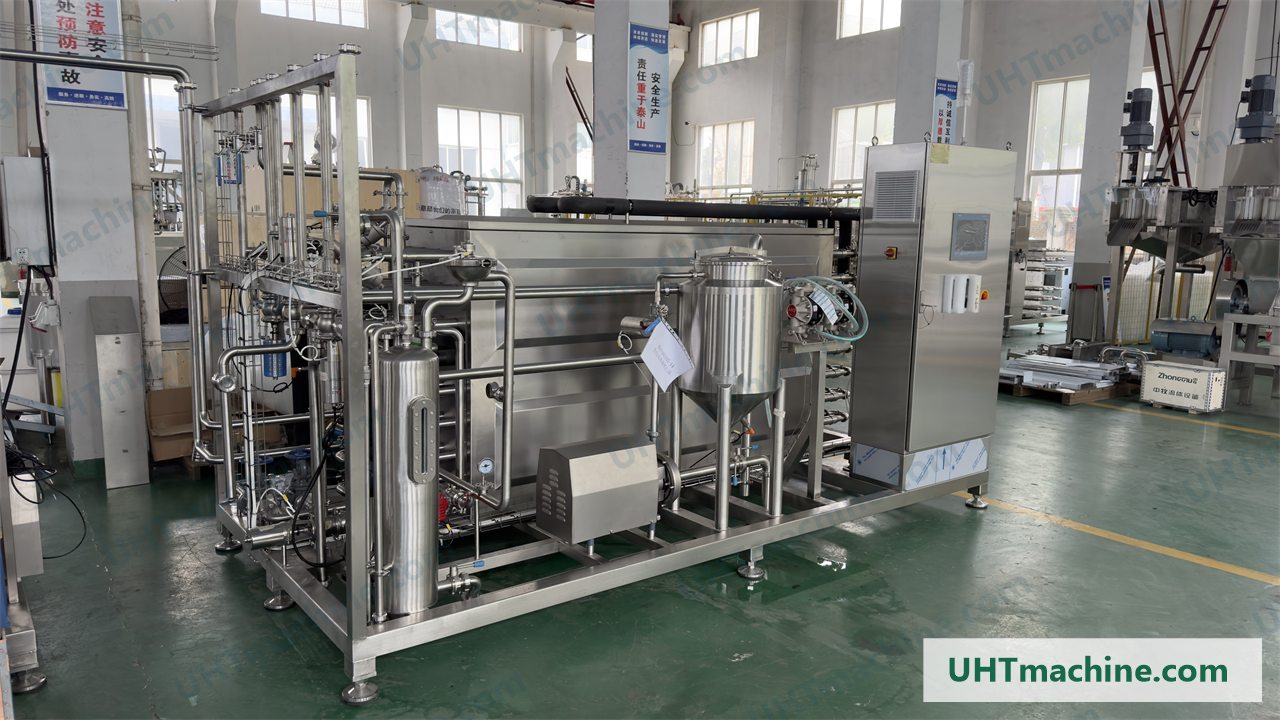
Technical overview
Capacity selection should include target daily output, operating shifts, filling machine speed, batch changeover, product losses, cleaning time, and whether the line needs room for future product growth.
A UHT system that is too large may create line-balance problems if filling cannot keep up. A system that is too small may restrict output even when downstream equipment has extra capacity.
Viscous products, fouling formulas, or frequent product changes can reduce effective production time. Cleaning windows and CIP design should be included in capacity calculations.
Sizing method
Use net saleable output and available production time, then test the result against filler speed, cleaning, changeovers, losses, and future demand.
| Net demand | Start with saleable volume by product and package, peak season, working days, shifts, and acceptable inventory rather than a catalog machine size. |
|---|---|
| Available hours | Subtract startup, shutdown, CIP, sterilization, product changeover, maintenance, planned stops, and realistic unplanned downtime. |
| Rate calculation | Use required UHT rate = net packaged volume divided by available production hours, then apply only a documented allowance for losses and line variability. |
| Line balance | Check the rate against filler throughput, aseptic buffer capacity, upstream preparation, homogenization, cooling, product recovery, and packaging changeovers. |
| Stress cases | Model the slowest product, longest cleaning cycle, smallest stable run, future expansion case, and one critical downstream stoppage before freezing capacity. |
Inquiry checklist
Buyer questions
Start with daily output, working hours, filling speed, cleaning time, product changes, and expansion plans. The quotation should match the complete production rhythm.
No. Oversizing can increase cost, utility demand, and line-balance difficulty if filling, storage, or cleaning systems cannot match the capacity.
Send target L/h, daily production volume, package size, filling speed, number of shifts, cleaning time, product changes, and expected future expansion.
Suppliers may offer different capacities. Compare them against the same product behavior, saleable-output target, turndown, cleaning allowance, expected losses, filler rate, operating schedule, and written guarantee basis.